
Selvedge denim (pronounced “sel-vedge”, short for self-edge) is a premium type of denim fabric known for its tightly woven edges that don’t unravel. Unlike most commercial denim woven on modern machines, selvedge denim is made on traditional shuttle looms that produce a clean, finished edge along both sides of the fabric. This unique edge gives selvedge denim its name and distinguishes it from other jeans.
What Makes Selvedge Denim Special?
1. Traditional Weaving Process
Selvedge denim originates from shuttle looms, older machines that weave fabric slowly and tightly. Each pass of the weft thread is looped back into itself, creating a self-finished edge that prevents fraying. Most modern denim is made on high-speed projectile looms that cut the fabric and require extra stitching to finish the edges.
2. Clean, Finished Edges
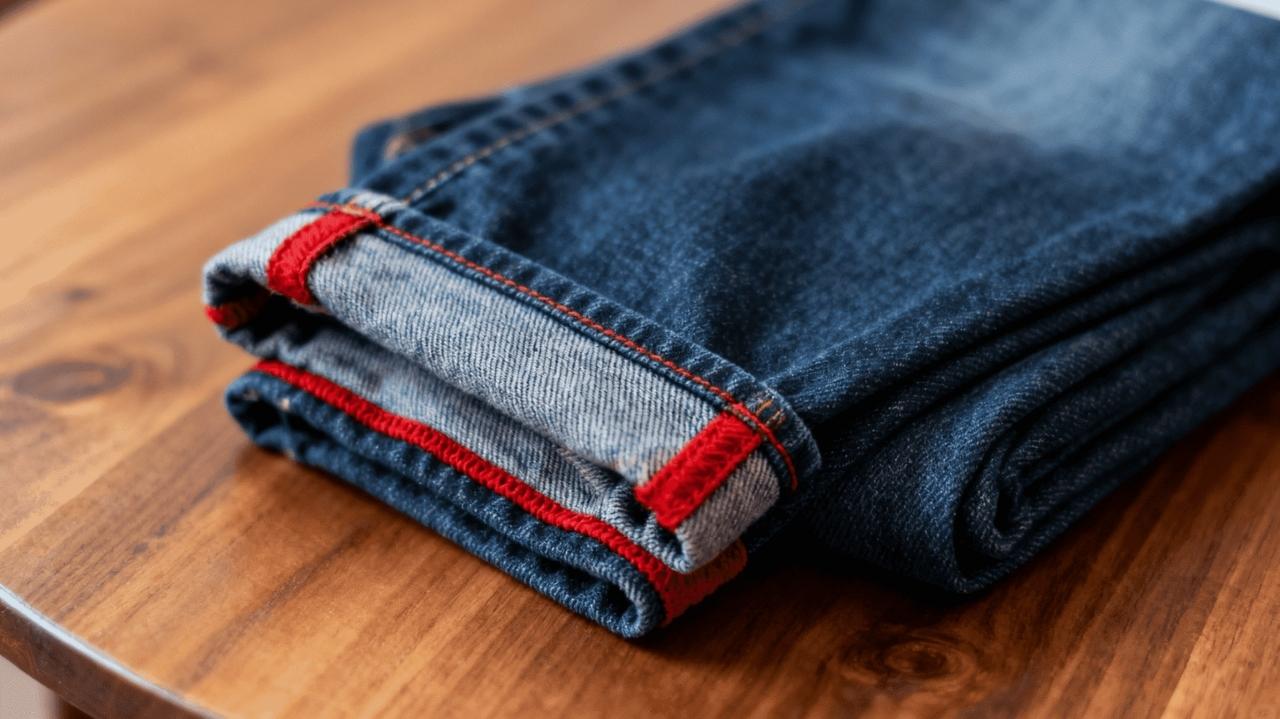
The hallmark of selvedge denim is the clean strip — often with a colored line (like red or blue) — visible when you cuff your jeans. This “selvedge ID” not only looks stylish but also indicates that the garment was woven on a shuttle loom.
3. Fabric Weight and Texture
Selvedge denim normally feels heavier and sturdier because of its tighter weave and thicker yarns. Typical fabric weight ranges from 12 oz to 21 oz per square yard, making it denser than most regular denim.
History of Selvedge Denim
Selvedge denim has roots back in the late 19th and early 20th centuries — originally used for durable workwear worn by miners, cowboys, and laborers. In the mid-1900s, American mills were the center of denim production, but as machine efficiency grew, most switched to modern looms.
By the 1970s–90s, authentic selvedge production nearly disappeared until Japanese denim makers revived the craft. Today, Japan is considered a leader in high-end selvedge denim, with brands and mills dedicated to preserving traditional techniques.
How to Identify Genuine Selvedge Denim
Here are the most reliable ways to confirm if a pair of jeans is true selvedge:
-
Cuff the Leg: Look for a finished edge with a colored line at the outseam.
-
No Overlocking: Authentic selvedge doesn’t need sewn-on edges — the loom produces a clean self-edge.
-
Fabric Weight: Heavier feel and tighter weave often means genuine selvedge.
-
Labels & Branding: Most brands mention shuttle loom production or Japanese mills if they’re real selvedge.
Selvedge Denim vs. Regular Denim
| Feature | Selvedge Denim | Regular Denim |
|---|---|---|
| Loom Type | Shuttle loom | Modern projectile loom |
| Edge Finish | Self-finished with colored strip | Cut & stitched |
| Durability | High – lasts years | Moderate – frays more easily |
| Weight | Heavy (12–21 oz) | Lighter (8–12 oz) |
| Price | Mid to high | Low to mid |
| Source: Comparison of selvedge vs regular production methods. |
Raw Denim and Selvedge Denim — What’s the Difference?
It’s important to understand that raw denim refers to denim that hasn’t been washed or pre-treated, while selvedge denim refers to how the denim is woven. A pair of jeans can be:
-
Raw and Selvedge (classic premium denim)
-
Raw but not Selvedge
-
Selvedge but washed or finished
Both raw and selvedge denim share high quality and durability, but selvedge specifically highlights the edge and weaving technique of the fabric.
Why Denim Enthusiasts Love Selvedge
1. Personalized Fading
Over time, high-quality indigo denim will fade uniquely based on wear patterns. This creates customized wear marks, like honeycombs behind the knees and whiskers near pockets — something regular denim rarely achieves.
2. Durability
The tight weave and finished edge reduce fraying and prolong the life of the jeans, making them a long-lasting wardrobe staple.
3. Craftsmanship and Heritage
Selvedge denim celebrates traditional textile craftsmanship, often reflecting artisanal skill and heritage from specific mills.
4. Investment Value
While more expensive upfront, these jeans frequently outlive multiple pairs of lower-quality denim, making them cost-effective in the long run.
How to Style Selvedge Denim
Selvedge jeans are versatile and can be dressed up or down.
Casual Looks
-
Classic white T-shirt and sneakers
-
Rolled cuffs to show off the selvedge edge
Smart Casual
-
Button-down shirt with loafers or boots
-
Dark wash gives a polished look suitable for business-casual environments
Streetwear
-
Oversized hoodies or graphic tees
-
High-top sneakers and accessories for an urban vibe
How to Care for Selvedge Denim
To make your denim last and develop authentic fades:
-
Wash infrequently to preserve indigo dye.
-
Use cold water and mild detergent when you do wash.
-
Air-dry instead of tumble drying.
-
Turn inside out to protect color.
Top Selvedge Denim Brands to Consider
Here are some well-known brands and mills that make high-quality selvedge denim:
-
Japanese Mills: Momotaro, Pure Blue Japan, Samurai Denim
-
Heritage Brands: Levi’s (especially Japanese and premium collections)
-
Contemporary Labels: Naked & Famous, 3sixteen, A.P.C.
Japanese selvedge denim has gained major global respect for its craftsmanship and attention to detail.